Organizing
Why do you organize queer tango events?
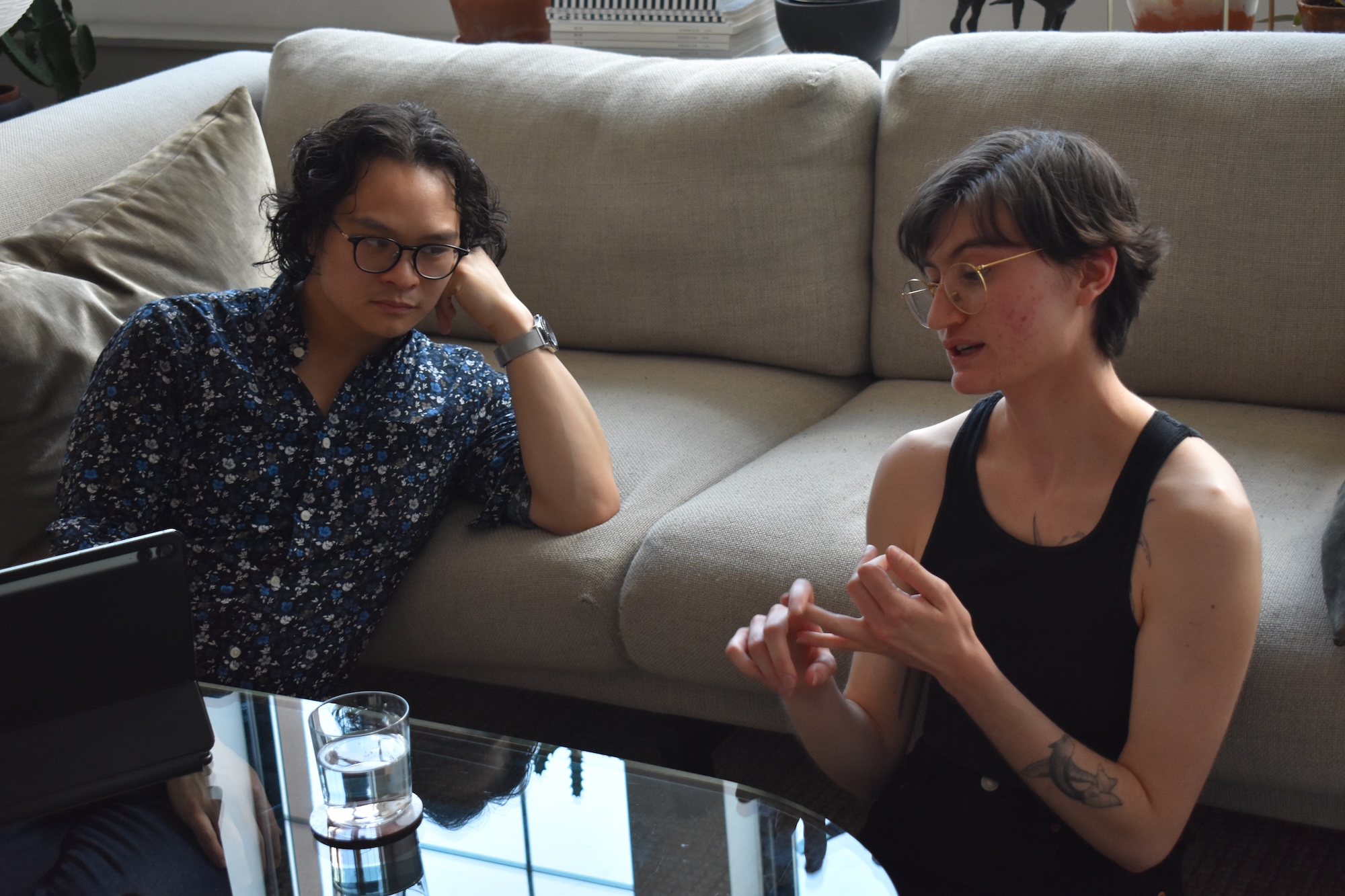
Phi Lee
I went through two phases of organizing queer tango. The first was with Tim. And for me, we were doing that because I realized there were more gay men who just didn't feel comfortable dancing at the straight milongas. That was 10 years ago, but the moment that made me want to come back to organizing queer tango was going to Europe and the Paris or Valencia queer tango festival, probably. I was going to all these queer tango festivals in Europe, one after another, so it's hard to say one particular experience. It was a period of experiences, because I got to compare the different queer tango events that I went to, and I realized there are certain similarities and certain differences. And that helped me to define the kind of queer tango event I wanted to create.
NW: What would you say is the kind of queer tango event that you want to create?
I would say the grand idea is that it can be a transformative experience…Hope!
NW: Hope—that's what you want for your events?
Yeah. For people to walk away feeling charged with hope.
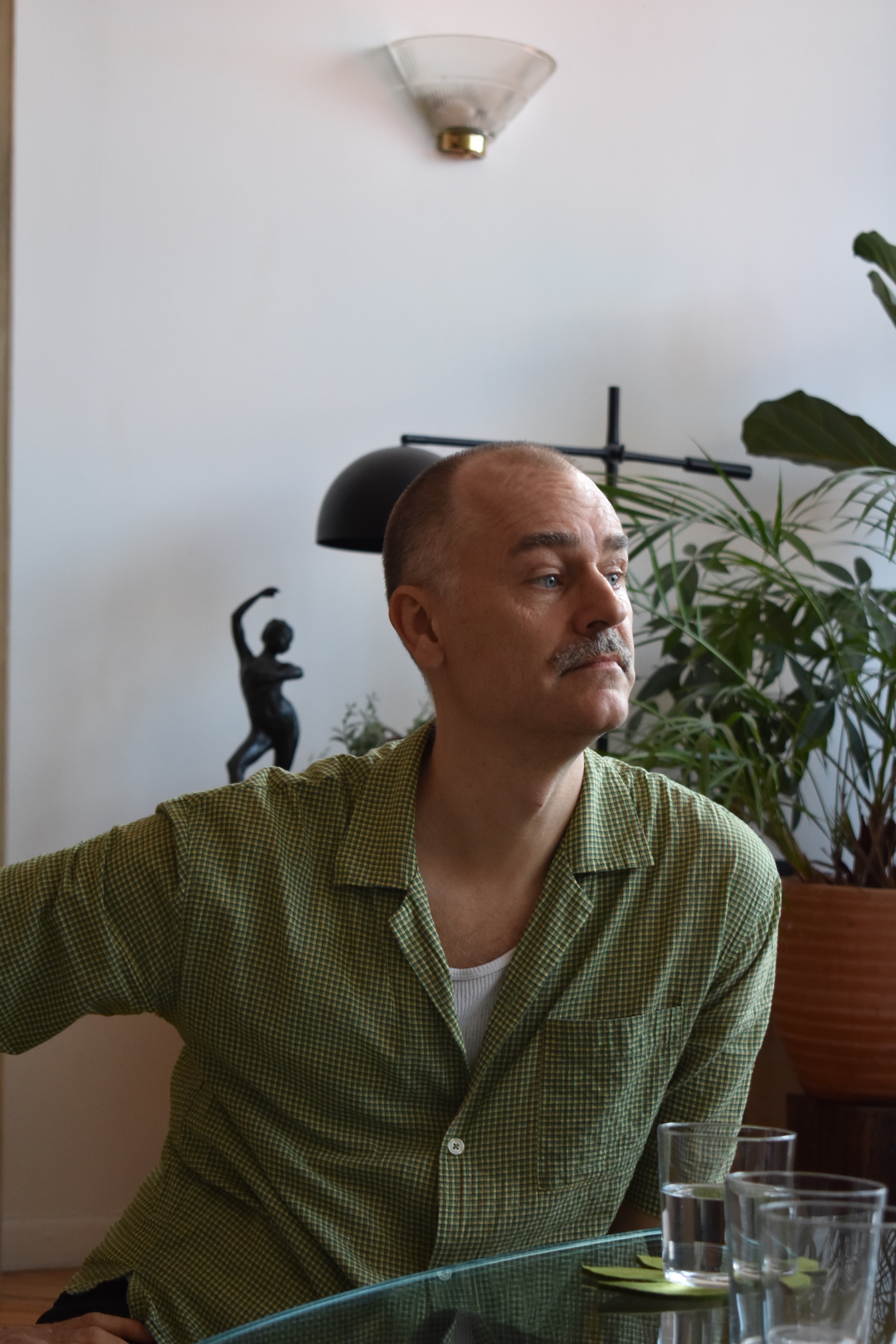
Mati
First and foremost because those are the spaces where I feel most comfortable. There are many other reasons, but in reality it’s a space where I want to be. So it’s a bit selfish, but at the same time I’m proud.
NW: Could you describe one or two moments that encapsulate for you why you organize queer tango?
There are two things that come to mind. One is recognizing that queer spaces are the tango spaces where I’m invited to participate as an organizer. The first opportunity I had to dj here in New York was in a queer space. The first opportunity I had to teach a class here was in a queer space. So I feel that the queer community is where I belong, so it’s the community that I have to and that I want to construct and collaborate with. Apart from the fact that it’s where I feel most comfortable.
And then I think a super important moment for me was at Miranda [the práctica] the day after Trump won the elections. While I had always thought of the práctica as something nontraditional in which alternative things could happen, in that moment the need arose to—the people who were there wanted to talk about how they felt and how things had happened. The fact that we could say “Okay, we’re going to stop the music, stop dancing, and we’re going to talk about what we’re feeling” felt unique to me. It seems like that’s something that can only happen in queer spaces.
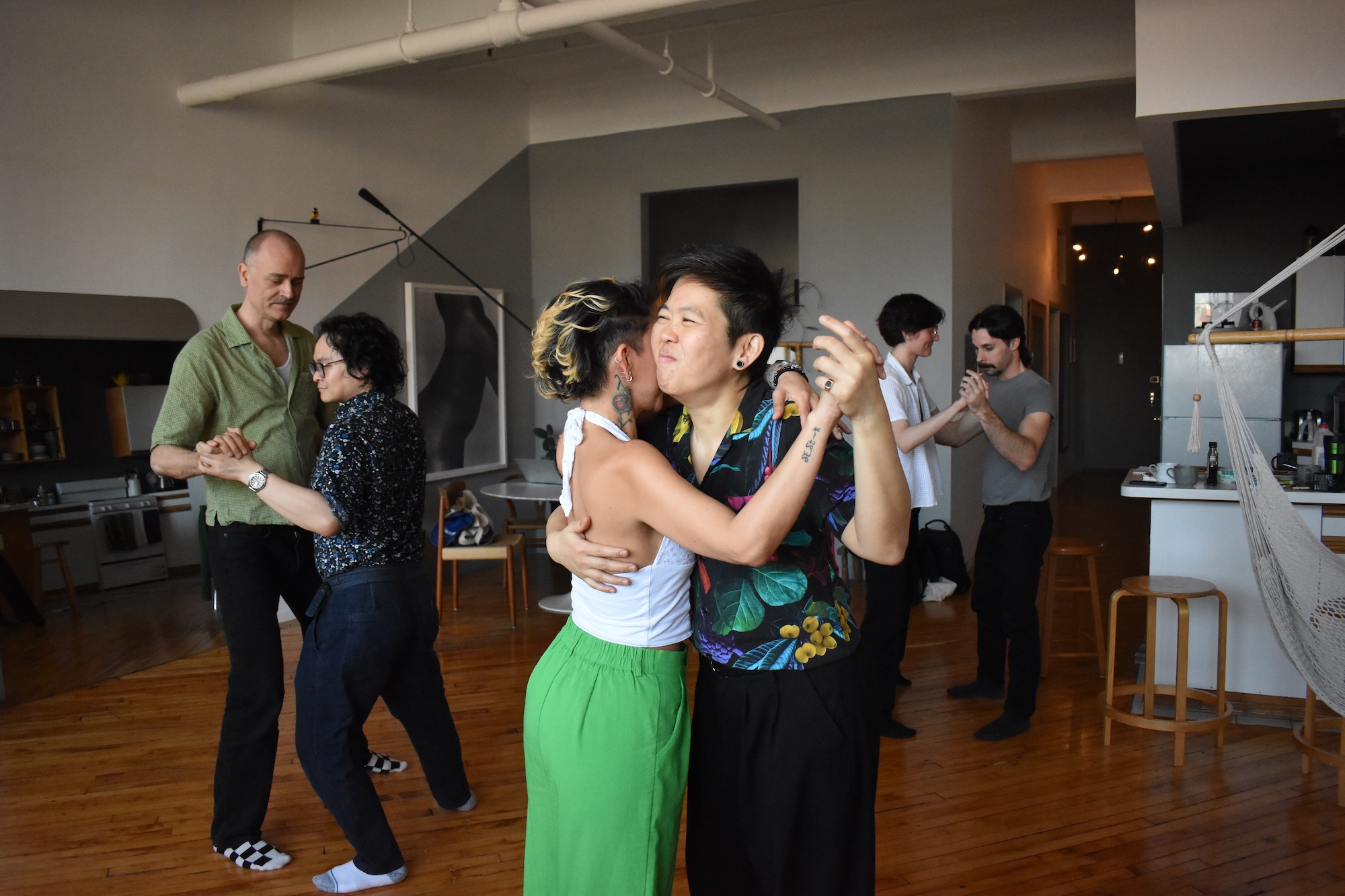
Norma
It seems to me, and I always try to emphasize this, that sometimes we feel good and more comfortable when we're learning, when we're sharing with people who understand our experience, right? In one way or another, some experience connects us…and sometimes we feel similar things. I think that's it: being with people who understand your experience and knowing that there are people who have more experience in tango, but that this person understands your experience and wants to share it with you. "Come, come, I'll help you. Look, I've already been through that. Come, I'll tell you how it went for me and what might work for you. Or at least I'll share it with you." I think that's very beautiful. I mean, I've received that. I've received it from female leaders who are teaching me right now, and I receive that information completely differently than I receive it from an excellent male teacher or even a heterosexual woman. I think it's very different. That's why I think it's important to add it and always emphasize it.
NW: Could you describe one or two moments that encapsulate for you why you organize queer tango?
In the last Tiny Práctica session we had, there was a moment when, while the teacher was reviewing music, or a video, I don't remember, I just stood there watching how the others were dancing and how they were interacting and practicing. It seemed so romantic and so sweet and so beautiful, and I felt so happy to see it, and I forgot I was in a class; I just stood there like an idiot watching them. I think I said to myself, "This is worth it, right?" There's another beautiful thing: sometimes we're not even dancing, sometimes we're simply talking and sharing, someone wants to say something or someone shares something, and a beautiful conversation unfolds. That's everything to me, not even the dancing itself, but that: being there, talking, just being, and being able to share. That's beautiful.
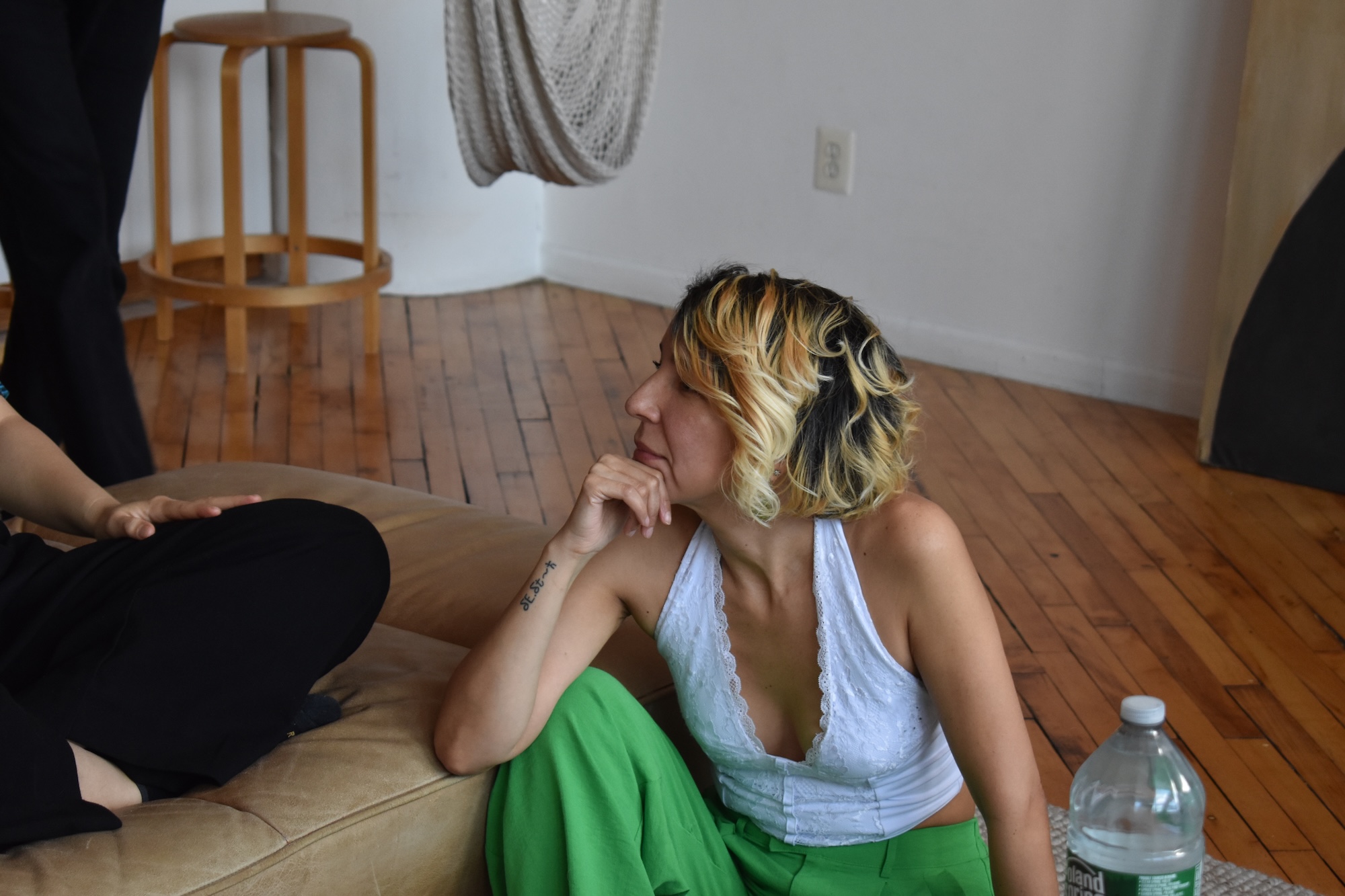
Leo
To create that space that I needed and that, if I hadn’t had it, I don’t know what would have happened. Because queer tango gave me that feeling of belonging. Not just tango, but queer tango specifically, because in traditional tango I had to create a persona to be able to go to tango. You had to put on a suit and tie to go to traditional tango spaces and in queer tango I could go as I wished. I can wear whatever I want, I can move however I want, it’s that freedom. It’s like coming home. Coming to the milonga, coming home, it’s the same sensation of peace, of not having to put on an act, not having to be what someone else wants you to be. We understood this need. We knew that there were people who needed to have this space and that’s why we decided to start NY Queer Tango Weekend.
NW: Could you describe one or two moments that encapsulate for you why you organize queer tango?
Once we were talking with various tango organizers and we asked ourselves—why are we organizing? Because by that time you could dance queer tango at regular milongas. So many traditional organizers said ‘why do you organize queer tango if here at my milonga everyone can dance how they want to?’ And I told them “It’s not the same.” That sensation of coming home and feeling at home only happens in queer spaces. You always feel that stare on the back of your neck when you go to a traditional milonga and dance queer tango. As much as you know everything’s fine, it’s never the case that everything is really fine. There’s always someone, some comment, some look, something that makes you feel that thing in your gut, that “unh!”
It has also happened to me in traditional milongas in Argentina, where I went out dancing with a friend, and the organizer approached me and asked me to leave the milonga. When I asked why, they said, "No, we dance traditionally here." So I remember responding, "But I am dancing traditionally, I'm dancing in the line of dance, in a close embrace, I'm not lifting my legs, I'm not doing kicks, my tango is traditional. What part of my tango is not traditional that you don't like?" Then they said, "No, guys, you understand, I'll give you your money back." I didn't want the money. I paid for the entrance, I'm dancing traditionally, I'm going to stay at the milonga dancing. So, even though I felt incredibly uncomfortable, I stayed until it closed.
While I also stayed simply to say, "Here we are, this is who we are, we can coexist in the milonga with everyone without causing any harm," other than what someone might have in their own mind—and we can't do anything about that—well, that's the way it is. So, those kinds of things make me want to organize spaces where that doesn't happen. Because he, as an organizer, perhaps has the right to say who can or cannot be there, but anyway, that's what mostly motivates me to keep creating these spaces.
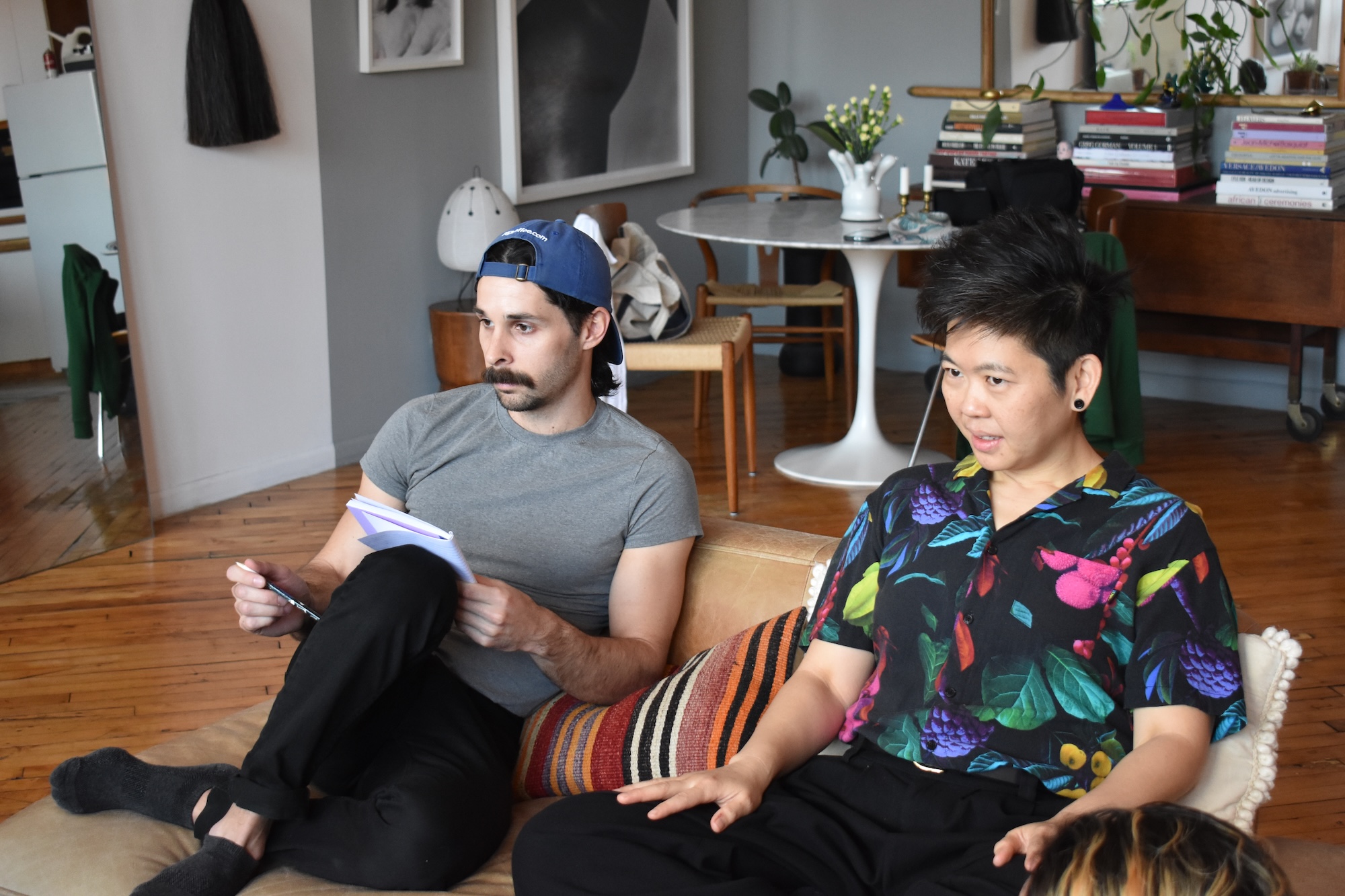
Mikael
So that there are more queer tango events. Because I only like going to them, and there aren't that many. That's why I organize.
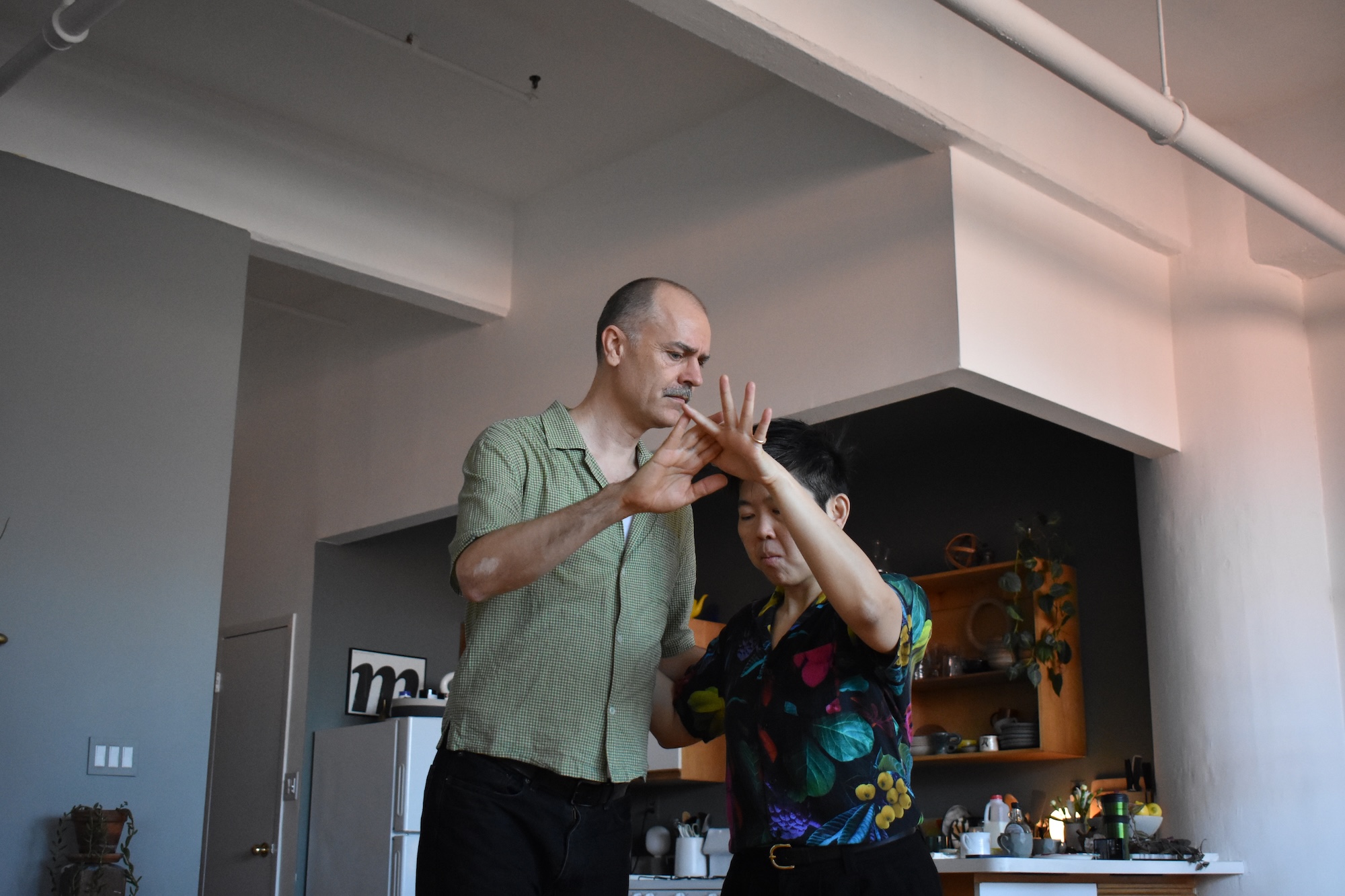
Arty
I was disillusioned with swing, and I was saying nobody's trying to make a community. No one's creating a space where we can all connect and be friends with each other, and we can all improve and grow and learn together. I felt like there was a need for it, and I think that Phi Lee—I have to thank Phi Lee so much, because it really was the queer tango symposium that she organized….I just hope that she maybe will appreciate how I consider what she did to be the base and foundation that we built on top of.
She spoke about how burned out she had been organizing so many queer tango classes and events. She said, you know, members of the community always ask me how they can help, and that is labor that I have to do now, where I'm now thinking of assigning people tasks and I now have to run this whole thing. What I want people to do is to step up and offer what they think they can do. That is how you relieve my burden, that is how you relieve the stress, and that is how you contribute to the community. Not by asking me what you can do, but instead offering what you can do. That, like—
NW: Like taking initiative?
Exactly. She was saying, you can't expect me to just tell you what to do, right? We're a community, we all have to work together. That really inspired me, and I reached out shortly afterwards to you and to Phi Lee, to talk about, “okay, let's put the theory into practice.” Let's actually organize the queer tango classes. That's where we really started, was classes where we have a regular space, where people can learn, and it can be accessible, and it can be a low-pressure environment, and it can also be inclusive and queer-centered.
NW: Could you describe one or two moments that encapsulate for you why you organize queer tango?
The moments that I already mentioned, but also we have so many great examples of times where we have felt really loved and beloved by the queer tango community. The most recent anniversary milonga, you were presented with a plaque—I was not there, but they presented us with plaques. I was so touched by that. I'm pretty sure it's up in my sewing room, up on a shelf. The fact that they—that every month we host a space, and on many of the months, everyone says, like, “Let's cheer for Noah and Arty. [Noah laughs] Let's really give them the credit for creating the space and organizing these classes and being there every single week.” Because it does feel thankless sometimes. It's not easy and it's stressful, and you give up a lot of things when you say every Saturday in the afternoon, I'm not going to be available for parties, for other things. So the appreciation that our community has shown us, and how much they tell us that they appreciate—that's something I love.